
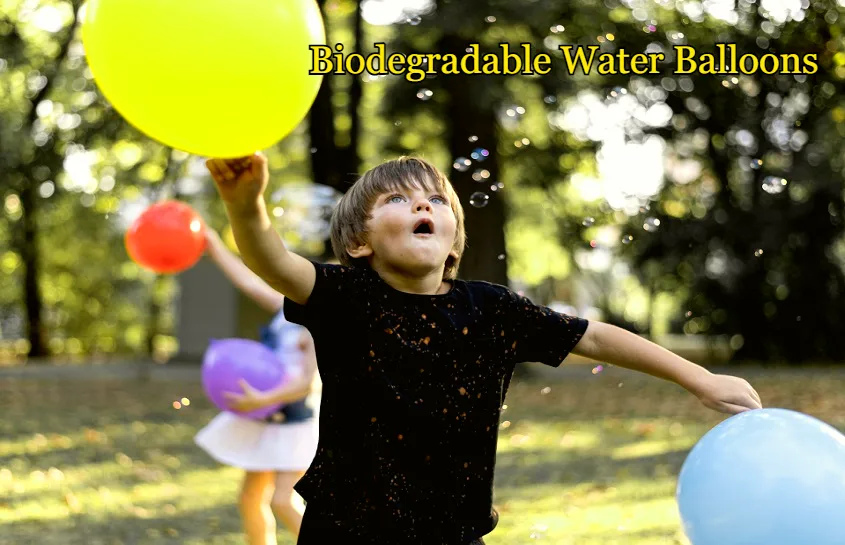
Biodegradable Water balloons and traditional water balloons alike are a classic part of summer fun. From backyard parties to family barbecues, they bring instant excitement. Kids love the thrill of throwing them, and adults often join in for the laughter and shared memories. All it takes is a bucket of water, a few balloons, and suddenly everyone is soaked, smiling, and enjoying the moment.
The problem begins when the fun is over. Once the balloons burst, the ground is left covered with hundreds of tiny rubber fragments. Many of these pieces are easy to miss. They hide in grass, stick to soil, or get washed into drains. Over time, those fragments can travel into rivers, lakes, and oceans. In some cases, birds, fish, or even pets mistake them for food, which can cause serious harm.
This growing environmental concern has made people pause and ask an important question: Are water balloons biodegradable? Unfortunately, most cheap water balloons sold in stores are made from synthetic materials that do not break down naturally. They can remain in the environment for years, slowly adding to long-term pollution.
This is where Biodegradable Water balloons become an important alternative. Made from natural latex sourced from rubber trees, they are designed to break down over time rather than linger in nature forever. While they still require responsible use and proper cleanup, they offer a far better option for families who want to enjoy summer fun without causing lasting environmental damage.
What Are Biodegradable Water Balloons?
A biodegradable water balloon isn’t very different to look at. If you set it beside a regular one, you probably couldn’t tell the difference. The secret is in the material.
Instead of being made from synthetic plastics, eco-friendly balloons are created from natural latex rubber that comes from trees. Because it’s organic, sunlight, heat, and soil bacteria can eventually break it down.
Of course, this does not mean that the balloon body will disappear as soon as you pop it. In most cases, they take several months, sometimes close to one year, to be completely dissolved. Yet, compared to plastic staying for centuries, this is a huge improvement.
Are Water Balloons Biodegradable?

This is the question on everyone’s mind. So, let’s give the straight answer.
- Regular balloons: Not biodegradable. They’re made from plastics or synthetic blends.
- Biodegradable water balloons: Yes, but they take time. Latex does eventually break down, though not overnight.
So, when a pack says water balloons biodegradable, it’s partly true. They will disappear eventually, but you still need to pick up the scraps after play.
Why Switching Matters
Some might think, It’s only balloons, what harm can they do? But when you think about how many parties, birthdays, and summer fights happen each year, the numbers add up fast.
Here are the top reason choosing biodegradable balloons that makes sense:
- Less harm to animals – Balloon fragments can choke birds, turtles, or fish. Latex eventually degrades, lowering the risk.
- Less long-term pollution – Plastic never truly goes away. Latex at least returns to nature.
- Good habits for kids – Choosing eco-friendly products and cleaning up afterward shows children that fun doesn’t have to damage the environment.
It’s not about being a perfect, you have made it better—it’s about making small changes that matter.
Environmental Impact of Traditional Water Balloons
Traditional water balloons may look harmless, but their impact goes far beyond one afternoon of fun. Most conventional balloons are made from synthetic latex or plastic-based materials. These do not fully decompose and instead break into smaller fragments over time. Those fragments turn into microplastics, which are now found in soil, rivers, oceans, and even food chains.
Another overlooked issue is cleanup efficiency. Studies and environmental groups point out that people usually collect only the visible balloon pieces. Tiny scraps remain hidden in grass, sand, or drains. During rainfall, these pieces can wash into stormwater systems and eventually reach lakes or seas. Once there, they become difficult to remove and may be mistaken for food by fish, birds, and other wildlife.
There is also the chemical side to consider. Some low-quality balloons contain dyes and additives that can slowly leach into the soil. Over time, this can affect plant growth and soil organisms. When you multiply this impact by millions of water balloon fights every summer, the environmental cost becomes significant, even though each balloon seems small.
How Long Do Biodegradable Water Balloons Take to Break Down?
This is where expectations need to be realistic. People sometimes assume biodegradable water balloons melt away instantly. That’s not how it works.
- In sunny, warm, and damp places, they might break down in three to four months.
- In cooler, dry spots, it can take close to a year.
So, while water balloons biodegradable is a true statement, you should still do the responsible thing and clean up after every game. Think of biodegradability as a safety net, not an excuse to litter.
How to Use Biodegradable Water Balloons Responsibly
Using biodegradable water balloons is a step in the right direction, but responsibility still plays a big role. First, always check the packaging. Truly biodegradable balloons are made from 100% natural latex derived from rubber trees. Vague labels like “eco-style” or “green” do not always guarantee biodegradability.
Location also matters. It is best to use biodegradable balloons in controlled areas like backyards, parks where cleanup is allowed, or paved spaces. Avoid beaches, forests, farms, or areas near water bodies, where leftover pieces are harder to retrieve and pose a greater risk to wildlife.
Timing and supervision can help too. Organizing balloon games when adults can supervise cleanup ensures fewer pieces are missed. Turning cleanup into a challenge or reward-based activity, especially for children, improves results. This approach reinforces the idea that fun and responsibility go together.
Finally, moderation is key. Instead of using hundreds of balloons at once, smaller games with fewer balloons reduce waste while still keeping the excitement alive. Biodegradable water balloons work best when combined with conscious use, proper disposal, and an understanding that eco-friendly choices are about reducing harm—not ignoring it.
A Real Backyard Test
Last year, I bought a pack of biodegradable balloons for a family BBQ. The kids loved them just as much as regular balloons. Honestly, nobody noticed a difference.
After the fight, the yard looked like a rainbow exploded—bits of balloon everywhere. Instead of dreading cleanup, we made it part of the game. Whoever collected the most balloon scraps got the last piece of chocolate cake. It worked. The yard was clean in minutes.
Months later, I checked a corner of the garden where a few scraps had been missed. Unlike plastic balloons that stay whole, the latex pieces had started to fade, crack, and crumble. It wasn’t instant, but nature was clearly breaking them down.
That was enough proof for me.
Smarter Alternatives to Balloons
If you want to avoid cleanup altogether, there are creative alternatives to single-use balloons:
- Sponge bombs – Cut up sponges, tie them with rubber bands, soak, and throw. Reusable, fun, and soft.
- Silicone water balls – They refill quickly, snap shut, and can be used thousands of times.
- DIY cloth bombs – Some families make reusable “water bombs” from old towels or fabric scraps.
Not only are these better for the planet, but you also save money because you don’t have to keep buying new balloons every summer.
FAQs about Biodegradable Water Balloons
Q: Are water balloons biodegradable?
A: Most are not. Only balloons made from natural latex are biodegradable.
Q: What are the biodegradable water balloons?
A: It’s a balloon made from rubber tree latex. It looks like a normal balloon but breaks down over time.
Q: Do biodegradable balloons disappear fast?
A: No. They take months. Cleanup is still important.
Q: Are they safe for animals?
A: Safer than plastic balloons, yes, but not risk-free. Wildlife can still swallow balloon pieces before they decompose.
Q: What’s the best eco-friendly alternative?
A: Reusable toys like sponge bombs or silicone water balls. They create zero waste and last for years.
Final Thoughts on Biodegradable Water Balloons
So, are water balloons biodegradable? The plain answer is no, unless you’re using the natural latex kind. A biodegradable water balloon is far less harmful to the planet, but it still isn’t perfect.
The real key is habits. Clean after each game. Teach children why it matters. Try playing with water toys again when you can. In this way, summer fun does not cause an environmental disorder.
After all, quarrels from water balloons should create memories that are forever – it’s not the one who does.