
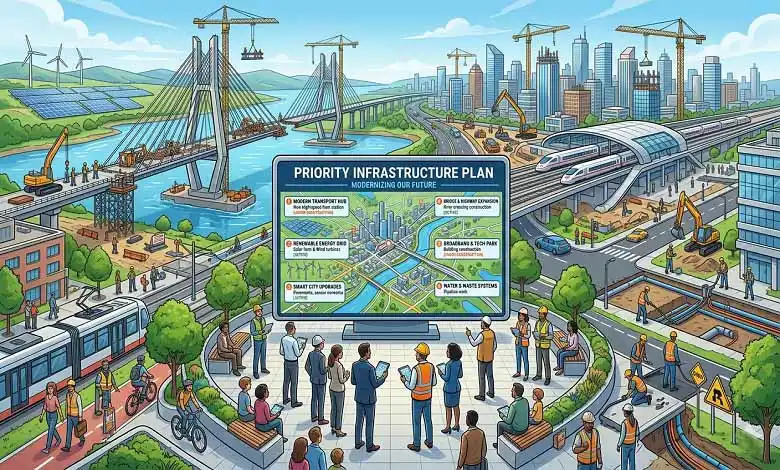
Planning infrastructure is not just about building roads or installing power lines—it is about shaping how people live, move, and grow over time. A Priority Infrastructure Plan (PIP) brings structure to this process by helping governments and planners decide which projects deserve immediate attention and which can wait. In an environment where resources are always limited, this kind of prioritization becomes essential. Without it, development often turns reactive, inefficient, and costly. A well-prepared PIP ensures that infrastructure investments are aligned with long-term economic goals, population needs, and sustainability concerns, making it one of the most important tools in modern urban and regional planning.
What is a Priority Infrastructure Plan?
A Priority Infrastructure Plan is a strategic framework that identifies, ranks, and schedules infrastructure projects based on their importance and overall impact. Instead of treating all projects equally, it introduces a clear system for deciding what should be done first. This approach helps avoid unnecessary delays and prevents resources from being spread too thin. In practical terms, a PIP focuses on infrastructure that delivers the highest public and economic value, such as transport networks, utilities, and essential social services. By combining data, forecasts, and policy objectives, it provides a roadmap that guides development in a more organized and purposeful way.
Why Priority Infrastructure Planning Matters Today
The need for structured infrastructure planning has grown significantly in recent years. Rapid urbanization, increasing population density, and rising demand for services have made it difficult for governments to keep up using traditional methods. A priority infrastructure plan allows planners to stay ahead of these challenges rather than constantly reacting to them. It also helps manage financial constraints by ensuring that funds are directed toward projects that offer the greatest return. In addition, modern infrastructure must address environmental concerns, which means decisions must consider long-term sustainability as well as immediate needs. This makes prioritization not just useful, but necessary.
Key Objectives of a Priority Infrastructure Plan
Every Priority Infrastructure Plan is built around a set of core objectives that guide decision-making. One of the main goals is to improve efficiency by ensuring that critical infrastructure is delivered at the right time. Another objective is to support economic growth by investing in systems that enable business activity and connectivity. Social outcomes are equally important, as infrastructure also plays a major role in healthcare, education, and overall quality of life. A PIP also aims to reduce risk by identifying potential issues early and addressing them before they escalate. Together, these objectives create a balanced approach that benefits both the economy and society.
Types of Infrastructure Covered in a Priority Infrastructure Plan
A comprehensive priority infrastructure plan typically includes both economic and social infrastructure. Economic infrastructure refers to systems that directly support production and trade, such as roads, railways, ports, energy supply, and telecommunications. These are essential for maintaining economic activity and enabling growth. Social infrastructure, on the other hand, focuses on services that improve daily life, including hospitals, schools, housing, and community facilities. While economic infrastructure often receives more attention due to its direct impact on productivity, social infrastructure is equally important for long-term development. A well-balanced PIP ensures that both areas are addressed effectively.
How Projects Are Selected and Prioritized
Selecting the right projects is one of the most critical parts of infrastructure planning. In a priority infrastructure plan, projects are evaluated based on multiple factors, including economic impact, social benefits, urgency, and feasibility. This process often involves detailed analysis, such as cost-benefit assessments and long-term projections. Projects that address immediate risks or deliver widespread benefits are usually ranked higher. At the same time, planners must consider how different projects interact with each other, ensuring that development happens in a logical sequence. This careful evaluation helps create a plan that is both practical and forward-looking.
The Importance of Timing and Project Sequencing
Even the most valuable infrastructure project can lose its effectiveness if it is delivered at the wrong time. A Priority Infrastructure Plan addresses this issue by carefully sequencing projects based on demand and readiness. For example, building transport networks before residential or commercial development may lead to underuse, while delaying them can result in congestion and inefficiency. Proper sequencing ensures that each project supports the next, creating a smooth and coordinated development process. This not only improves outcomes but also reduces costs and avoids unnecessary disruptions.
Funding Strategies in a Priority Infrastructure Plan
Financing is one of the biggest challenges in infrastructure development, and a strong priority infrastructure plan must include a clear funding strategy. Governments often rely on a mix of sources, including public budgets, private investment, and public-private partnerships. In some cases, international funding or infrastructure bonds may also be used. The key is to ensure that funding is sustainable and aligned with project timelines. Without proper financial planning, even well-prioritized projects can face delays or cancellation. A good PIP takes these factors into account from the beginning, making implementation more realistic and achievable.
Role of Priority Infrastructure Areas (PIAs)
Priority Infrastructure Areas are specific zones where development is concentrated to maximize efficiency and reduce costs. Instead of spreading infrastructure across a wide region, planners focus on areas where services can be delivered more effectively. This approach helps avoid fragmented development and ensures better use of resources. In many cases, PIAs are selected based on existing infrastructure, growth potential, and accessibility. By guiding development into these areas, a priority infrastructure plan supports more organized urban expansion and improves service delivery for residents.
Benefits of a Well-Structured Priority Infrastructure Plan
A well-designed Priority Infrastructure Plan offers several long-term benefits. It improves economic performance by supporting business activity and attracting investment. It also enhances the quality of life by providing reliable access to essential services. From a financial perspective, it ensures that public funds are used efficiently, reducing waste and maximizing impact. In addition, it promotes sustainability by encouraging environmentally responsible development. Perhaps most importantly, it creates a sense of direction, allowing governments and communities to move forward with confidence and clarity.
Challenges in Implementing a Priority Infrastructure Plan
Despite its advantages, implementing a Priority Infrastructure Plan is not without difficulties. Funding constraints can limit the number of projects that can be undertaken, while political changes may alter priorities over time. Coordination between different agencies can also be challenging, especially in large-scale projects involving multiple stakeholders. Environmental concerns and public opposition may further complicate implementation. These challenges highlight the importance of strong governance, transparent decision-making, and continuous monitoring throughout the planning and execution process.
Role of Technology in Modern Infrastructure Planning
Technology has become an integral part of infrastructure planning, making it more accurate and efficient. Tools such as geographic information systems (GIS) allow planners to analyze spatial data and identify areas of need. Data analytics helps forecast future demand, while digital modelling enables the simulation of different scenarios before construction begins. These technologies reduce uncertainty and improve decision-making, making it easier to develop effective priority infrastructure plans. As technology continues to evolve, its role in planning is expected to grow even further.
Future Trends in Priority Infrastructure Planning
The future of infrastructure planning is likely to be shaped by sustainability, innovation, and resilience. There is a growing emphasis on green infrastructure, including renewable energy and eco-friendly design. Smart city technologies are also becoming more common, integrating digital systems into urban environments to improve efficiency. Climate resilience is another key focus, as infrastructure must be able to withstand extreme weather conditions. In addition, collaboration between public and private sectors is expected to increase, bringing new opportunities and challenges to infrastructure development.
Conclusion
A Priority Infrastructure Plan is not just a planning document—it is a strategic tool that shapes the future of development. By focusing on the most important projects and delivering them at the right time, it ensures that infrastructure supports both economic growth and social well-being. In a world where demands are constantly increasing, having a clear and well-structured plan is essential. It allows governments to move beyond short-term solutions and build systems that are sustainable, efficient, and capable of meeting future needs.
Frequently Asked Questions (FAQs)
Q: What is a Priority Infrastructure Plan?
A: A Priority Infrastructure Plan is a structured approach used to identify and prioritize infrastructure projects based on their importance and impact.
Q: Why is a Priority Infrastructure Plan important?
A: It ensures efficient use of resources, supports economic growth, and improves access to essential services.
Q: What sectors are included in a PIP?
A: Transport, energy, water systems, telecommunications, healthcare, education, and housing are commonly included.
Q: How are projects prioritized in a PIP?
A: Projects are evaluated based on factors such as economic benefits, urgency, feasibility, and social impact.
Q: What are Priority Infrastructure Areas?
A: These are specific locations where infrastructure development is focused to maximize efficiency and support growth.
Q: How is infrastructure funded?
A: Funding typically comes from government budgets, private investment, partnerships, and financial institutions.
Q: Can a Priority Infrastructure Plan change over time?
A: Yes, it is a flexible framework that can be updated as conditions and priorities evolve.