
Corporate culture shapes how people think, work, and interact inside an organization. It influences employee satisfaction, innovation, customer service, and business performance. However, understanding corporate culture has always been difficult because it is built from attitudes, behaviours, communication patterns, and unwritten rules.
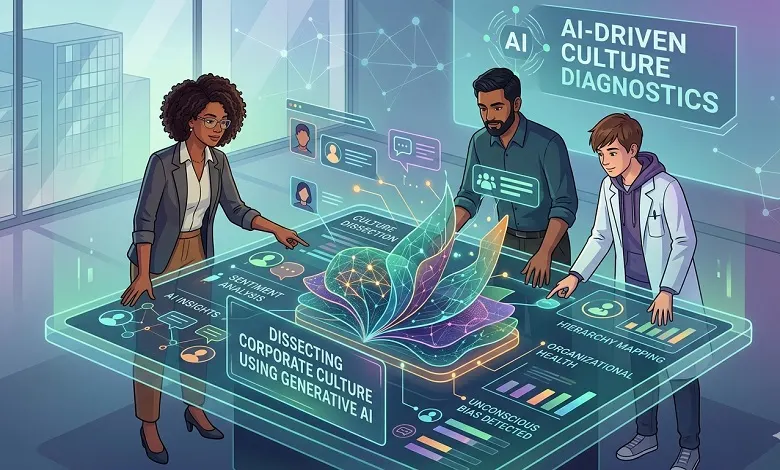
Today, businesses are using generative AI to study and improve workplace culture in ways that were not possible before. By analyzing employee feedback, communication styles, internal documents, and team behaviour, generative AI can help leaders understand the real culture inside their organizations.
This article explores the meaning of corporate culture, how generative AI can dissect it, the benefits and challenges involved, and how businesses can use this technology responsibly.
What Is Corporate Culture?
Corporate culture is the collection of values, beliefs, behaviours, and practices that define how a company operates. It is often described as “how things are done around here.”
A company’s culture includes:
- Leadership style
- Communication methods
- Workplace values
- Employee relationships
- Attitudes toward innovation
- Diversity and inclusion
- Recognition and rewards
- Work-life balance
Some organizations promote open communication and creativity, while others focus on strict hierarchy and formal processes. A healthy corporate culture can improve employee engagement and productivity. A poor culture can lead to high turnover, low morale, and weak performance.
Why Understanding dissecting corporate culture using generative AI
Many companies think they understand their own culture, but the reality may be very different. Leaders often rely on surveys, meetings, or personal observations. These methods can be useful, but they are limited.
Employees may not always share honest feedback in traditional surveys. Managers may interpret information differently based on their own opinions. As a result, the real issues inside the company can remain hidden.
Understanding corporate culture matters because it directly affects:
| Area | Impact of Strong Culture |
| Employee Retention | Workers stay longer and feel more connected |
| Productivity | Teams collaborate more effectively |
| Innovation | Employees feel safe sharing ideas |
| Recruitment | Companies attract better talent |
| Customer Experience | Happy employees often create happier customers |
| Reputation | A positive culture improves brand image |
When businesses fail to understand their culture, problems can grow quietly. Miscommunication, burnout, lack of trust, and resistance to change can become serious obstacles.
What Is Generative AI?
Generative AI refers to artificial intelligence systems that can create, summarize, interpret, and generate content. These systems can analyze text, conversations, emails, reports, and other forms of communication.
Unlike traditional analytics tools that focus mainly on numbers, generative AI can understand language and context. This makes it ideal for exploring the human side of organizations.
Examples of what generative AI can do include:
- Summarize employee feedback
- Detect common themes in surveys
- Identify communication problems
- Compare leadership messages with employee opinions
- Generate reports about workplace trends
- Predict future cultural risks
Because corporate culture is largely expressed through language and behaviour, generative AI offers a new way to study it.
How Generative AI Dissects Corporate Culture
Generative AI can examine large amounts of company data to reveal patterns and hidden insights. It works by processing information from multiple sources, such as:
- Employee surveys
- Internal chat messages
- Emails
- Performance reviews
- Exit interviews
- HR records
- Meeting notes
- Training documents
- Company policies
The AI then identifies recurring ideas, emotions, and communication styles.
1. Analyzing Employee Feedback
Most organizations collect feedback through surveys or reviews, but manually reading thousands of comments is difficult. Generative AI can quickly analyze all responses and group them into categories.
For example, the AI may discover that employees repeatedly mention:
- Lack of communication from leadership
- Concerns about workload
- Appreciation for flexible working
- Frustration with limited growth opportunities
Instead of simply counting keywords, generative AI can understand the meaning behind employee comments. It can recognize whether workers feel anxious, motivated, ignored, or inspired.
2. Detecting Emotional Trends
Employee emotions often reflect the health of corporate culture. Generative AI can perform sentiment analysis to detect emotional patterns across the organization.
For instance, the AI might reveal that:
- Employees in one department feel highly motivated
- Another team experiences frustration and stress
- Confidence drops after a major company change
- Trust in leadership increases after transparent communication
These emotional insights help leaders understand where problems exist and which areas need attention.
3. Measuring Leadership Alignment
Many organizations claim to value collaboration, transparency, or diversity. However, employee experiences may not match these statements.
Generative AI can compare leadership communication with employee feedback. If company leaders say they support open communication but employees describe a culture of silence and fear, the AI can highlight this mismatch.
This allows businesses to identify gaps between stated values and actual behaviour.
| Stated Company Value | Employee Experience |
| Transparency | Employees feel uninformed |
| Innovation | Worker’s fear making mistakes |
| Teamwork | Workers’ fear of making mistakes |
| Diversity | Employees do not feel included |
By identifying these differences, organizations can take more meaningful action.
4. Identifying Communication Patterns
The way people communicate reveals a great deal about company culture. Generative AI can study communication channels and identify patterns such as:
- Which teams collaborate frequently
- Which departments rarely interact
- Whether communication is formal or open
- Whether managers dominate conversations
- Whether remote workers are excluded
For example, if the AI finds that certain employees rarely participate in discussions, leaders may discover hidden barriers in the workplace.
5. Predicting Cultural Risks
Generative AI can do more than analyze current conditions. It can also predict future problems.
By examining past trends, the AI may identify warning signs such as:
- Rising employee dissatisfaction
- Increasing turnover risk
- Declining trust in management
- Burnout in specific departments
This predictive ability allows organizations to solve issues before they become serious.
Benefits of Using Generative AI for Corporate Culture
There are several reasons why businesses are turning to generative AI.
Faster Analysis
Traditional culture studies can take weeks or months. Generative AI can review thousands of documents and comments within minutes.
More Honest Insights
Employees may be more open when sharing anonymous feedback. Generative AI can uncover patterns that managers might miss.
Better Decision-Making
Instead of relying on assumptions, leaders can use data-driven insights to improve the workplace.
Continuous Monitoring
Corporate culture changes over time. Generative AI allows businesses to monitor culture continuously rather than only once a year.
Personalized Recommendations
The AI can suggest specific actions for different teams or departments. For example, one team may need better communication, while another may need stronger recognition programs.
Real-World Examples of Generative AI in Corporate Culture
Many companies are already using AI to better understand employee experiences.
Human Resources Teams
HR departments use generative AI to review employee surveys, performance evaluations, and exit interviews. This helps them identify trends in morale, engagement, and retention.
Remote Work Environments
As remote and hybrid work become more common, understanding company culture is harder. Generative AI can study virtual communication and determine whether remote employees feel connected or isolated.
Mergers and Acquisitions
When two companies merge, cultural differences can create conflict. Generative AI can compare the values, communication styles, and behaviours of both organizations.
This helps leaders create a smoother transition and avoid misunderstandings.
Diversity and Inclusion Programs
Generative AI can detect whether certain groups feel excluded or underrepresented. By analyzing language and experiences, businesses can identify areas where inclusion needs improvement.
Challenges and Risks of Using Generative AI
Although generative AI offers many advantages, there are also challenges that businesses must consider.
Privacy Concerns
Employees may worry that their emails, chats, or feedback are being monitored too closely. Organizations must protect privacy and clearly explain how data will be used.
Bias in AI Systems
Generative AI models may reflect biases from the data they are trained on. If not carefully managed, the AI may misinterpret certain communication styles or unfairly judge some groups.
Misinterpretation of Results
AI can identify patterns, but it does not always understand the full context. Human leaders still need to review the findings and make final decisions.
Over-Reliance on Technology
Corporate culture is deeply human. Generative AI should support managers and HR teams, not replace personal conversations and leadership.
| Challenge | Possible Solution |
| Privacy concerns | Use anonymous and secure data |
| AI bias | Regularly test and review AI models |
| Misinterpretation | Combine AI insights with human review |
| Lack of trust | Be transparent about how AI is used |
Best Practices for Using Generative AI Responsibly
To gain the benefits of generative AI while avoiding problems, businesses should follow several best practices.
Be Transparent
Employees should know what information is being analyzed and why. Honest communication builds trust.
Protect Employee Privacy
Organizations should avoid collecting unnecessary personal information. Anonymous data is often enough to understand cultural patterns.
Use AI as a Tool, not a Replacement
Generative AI can provide insights, but leaders still need to talk with employees, listen to concerns, and create real change.
Review Results Carefully
Managers and HR professionals should examine AI findings before making decisions. Human judgment remains essential.
Focus on Improvement
The purpose of analyzing corporate culture should be to create a better workplace, not to punish employees.
The Future of Corporate Culture and Generative AI
In the future, generative AI will likely become an important part of workplace management. Companies may use AI dashboards that provide real-time updates about employee engagement, communication quality, and workplace sentiment.
Future systems may be able to:
- Predict burnout before it happens
- Recommend leadership training
- Suggest changes to company policies
- Improve collaboration across departments
- Detect signs of discrimination or exclusion
As these tools improve, organizations will gain deeper insight into how their employees truly feel.
However, the most successful companies will be those that combine technology with empathy. Generative AI can reveal patterns, but real cultural improvement comes from strong leadership, trust, and human connection.
Conclusion
Dissecting corporate culture using generative AI gives organizations a powerful new way to understand their workplaces. By analyzing employee feedback, communication, and emotional trends, businesses can discover what is really happening inside their organizations.
Generative AI helps leaders identify strengths, uncover hidden problems, and make smarter decisions. It offers faster analysis, better insights, and the ability to predict future risks.
At the same time, companies must use this technology responsibly. Privacy, fairness, and human oversight remain essential.
Corporate culture has always been difficult to measure because it involves people, emotions, and relationships. Generative AI does not replace the human side of business, but it provides a valuable tool for understanding it more clearly than ever before.