
Introduction
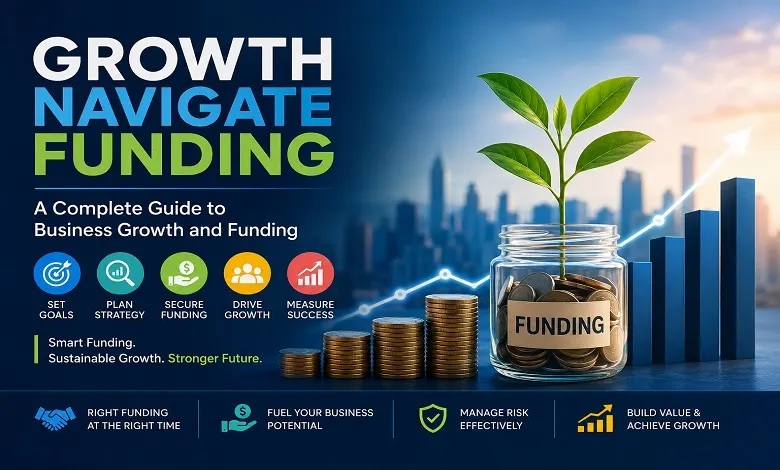
Growth Navigate Funding provides a strategic way for businesses to approach capital planning, funding, and expansion. Companies may need financing to hire employees, purchase equipment, develop products, strengthen cash flow, or enter new markets. However, choosing the right funding is about more than securing money quickly. Businesses also need to consider how much capital they require, where it should come from, and whether the financing supports their long-term objectives.
A well-planned funding strategy connects available capital with specific business goals. Whether a company is an early-stage startup, an established small business, or a growing organization, understanding different funding options can help owners make more informed financial decisions and manage growth with greater confidence.
What Is Growth Navigate Funding?
Growth Navigate Funding can be understood as a structured approach to finding and managing capital for business growth. Rather than treating funding as a standalone financial transaction, the approach connects financing with a company’s goals, current financial position, and plans.
Businesses may require funding for very different reasons. A startup might need capital to develop a product and acquire its first customers, while an established company may need financing to purchase equipment, expand its workforce, or enter a new market.
This makes it important to evaluate funding based on the purpose behind it.
A practical funding strategy considers:
- The amount of capital required
- The purpose of the funding
- The company’s current financial position
- Available financing options
- Repayment or ownership requirements
- Expected business outcomes
- Long-term financial sustainability
The goal is not simply to obtain capital. It is to obtain appropriate capital for a clearly defined business purpose.
Why Businesses Need Growth Funding
Growth often creates expenses before it creates additional revenue. A company may need to hire people, purchase inventory, invest in technology, or increase marketing before the resulting sales arrive.
External funding can help bridge this gap when internal cash reserves are not sufficient.
Businesses commonly seek growth funding to:
- Expand operations
- Launch new products
- Increase inventory
- Purchase equipment
- Hire employees
- Improve technology
- Enter new markets
- Open additional locations
- Increase marketing activity
- Strengthen working capital
However, funding should support a realistic opportunity. Borrowing money without a clear plan for using it can increase financial pressure without producing meaningful growth.
Growth Navigate Funding by Business Stage
The right funding strategy often changes as a company develops.
Startup Stage
Early-stage companies may have limited revenue but need capital to develop products, test their market, build a team, or acquire customers.
Potential sources can include founder capital, angel investment, grants, crowdfunding, and selected startup financing programs.
Early Growth
Once a company demonstrates customer demand and begins generating consistent revenue, it may have access to additional financing options.
Funding at this stage can support hiring, marketing, technology, inventory, and operational improvements.
Expansion Stage
Established companies may seek larger amounts of capital to open new locations, expand production, enter new markets, or acquire another business.
At this stage, businesses may consider commercial loans, lines of credit, growth equity, strategic investment, or other forms of expansion capital.
Main Types of Business Funding
Different funding methods have different costs, requirements, and implications for ownership.
| Funding Type | Common Purpose | Main Benefit | Key Consideration |
| Business Loan | Expansion, equipment, working capital | No equity dilution | Repayment and interest |
| Line of Credit | Short-term working capital | Flexible access | Interest and credit terms |
| Angel Investment | Startup and early growth | Capital and expertise | Ownership dilution |
| Venture Capital | High-growth companies | Significant growth capital | Investor expectations |
| Revenue-Based Financing | Businesses with recurring revenue | Financing linked to revenue | Can affect future cash flow |
| Grants | Specific eligible projects | May not require repayment | Eligibility and competition |
| Crowdfunding | Products and early ventures | Capital and market exposure | Campaign uncertainty |
| Bootstrapping | Early business growth | Retain ownership | Limited available capital |
There is no universally best option. A business should compare financing according to its revenue, cash flow, growth plans, risk tolerance, and ownership preferences.
How to Create a Growth Funding Strategy
A strong funding strategy starts with the business objective.
1. Define the Business Goal
Start by identifying exactly what the company wants to accomplish.
For example, the goal may be to:
- Increase production capacity
- Launch a new product
- Hire additional employees
- Open a new location
- Expand into another market
- Upgrade technology
- Increase customer acquisition
A specific objective makes the funding requirement easier to calculate.
2. Calculate the Required Capital
After defining the goal, estimate the total cost.
Include both direct and supporting expenses. For example, opening a new location may involve rent, equipment, employees, inventory, marketing, technology, and initial operating expenses.
It is also sensible to consider a reasonable contingency for unexpected costs.
3. Review Current Finances
Before seeking external funding, examine the company’s current financial position.
Important areas include:
- Revenue
- Profitability
- Cash flow
- Existing debt
- Monthly operating expenses
- Cash reserves
- Customer concentration
- Outstanding liabilities
This assessment helps determine whether additional funding is necessary and what type of financing the business can reasonably manage.
4. Compare Funding Sources
Once the requirement is clear, compare available options.
Debt may work well for businesses with predictable cash flow, while equity investment may be more appropriate for companies with significant growth potential but limited current revenue.
The financing structure should fit the company’s circumstances rather than simply being selected because it is readily available.
5. Prepare a Funding Plan
A clear funding plan should explain how the capital will be used.
For example:
| Planned Use | Example Purpose |
| Employees | Hiring sales or technical staff |
| Equipment | Increasing production capacity |
| Technology | Software and infrastructure |
| Marketing | Customer acquisition |
| Working Capital | Supporting day-to-day operations |
Specific allocations help lenders and investors understand how the funding is expected to contribute to growth.
What Lenders and Investors Consider
Different capital providers evaluate businesses differently.
Lenders
Traditional lenders often focus on repayment ability. They may review revenue, cash flow, credit history, existing debt, collateral, and financial stability.
A company with strong revenue but inconsistent cash flow may still face challenges when applying for certain types of debt financing.
Angel Investors
Angel investors may look closely at the founding team, product, market opportunity, customer traction, and potential for future growth.
Some investors can also contribute industry experience and business connections.
Venture Capital Firms
Venture capital is generally aimed at businesses capable of achieving substantial growth.
Investors may consider:
- Market size
- Revenue growth
- Product-market fit
- Competitive advantage
- Customer acquisition
- Scalability
- Management team
- Long-term return potential
Because equity investment can affect ownership and control, founders should understand the complete investment agreement before accepting an offer.
Preparing for Funding
Good preparation can make the funding process more efficient.
Organize Financial Records
Depending on the provider, businesses may need:
- Profit and loss statements
- Balance sheets
- Cash-flow statements
- Bank statements
- Tax records
- Revenue reports
- Existing debt information
- Business registration documents
- Financial projections
Numbers should be accurate and consistent across all documents.
Build Realistic Projections
Financial projections should reflect reasonable assumptions.
If a business plans to hire employees, for example, the forecast should account for salaries, benefits, recruitment costs, training, and the time required for new employees to contribute to revenue.
Overly optimistic projections can weaken credibility.
Explain the Use of Funds
A funding request should clearly explain where the money will go and what the business expects to achieve.
Instead of simply saying that capital will be used for “growth,” explain whether it will finance inventory, equipment, employees, product development, marketing, or another specific objective.
How to Evaluate a Funding Offer
Getting approved for funding does not automatically mean the offer is suitable.
Business owners should review the complete terms before accepting.
Important factors include:
- Total financing cost
- Interest rate
- Fees
- Repayment schedule
- Loan duration
- Collateral requirements
- Personal guarantees
- Early repayment conditions
- Equity percentage
- Investor rights
- Contractual restrictions
For example, two financing offers may provide the same amount of money but have significantly different total costs.
With equity financing, founders should look beyond the valuation and understand ownership, voting rights, investor protections, and other contractual provisions.
Managing Capital After Funding
The work does not end when funding reaches the business account.
Companies should monitor how the money is spent and compare results with the original plan.
Useful performance indicators can include:
- Revenue growth
- Customer acquisition
- Customer retention
- Gross margin
- Cash flow
- Operating costs
- Inventory turnover
- Production capacity
- Customer acquisition cost
The most useful metrics depend on the purpose of the funding.
For example, if capital is intended to expand sales, management should track new customers, revenue, sales costs, and profitability rather than simply measuring total spending.
Growth Funding and Cash Flow
Growth can place additional pressure on cash flow.
A company may have to pay suppliers, employees, marketing expenses, and other costs before receiving payment from customers.
This makes cash-flow forecasting an important part of funding decisions.
Before accepting financing, businesses should understand:
- When capital will be spent
- When additional revenue is expected
- How much cash is required for normal operations
- How repayments will affect monthly cash flow
- What happens if growth is slower than projected
This is particularly important when the funding involves fixed repayments.
Common Funding Mistakes
Getting access to capital is important, but choosing and managing funding incorrectly can create financial problems. Businesses should evaluate not only how much money they can obtain but also whether the funding structure fits their cash flow, growth plans, and ability to meet future obligations.
1. Raising More Capital Than Necessary
It can be tempting to accept the largest funding amount available. However, excess capital may create unnecessary interest costs, repayment obligations, or equity dilution. A better approach is to calculate the amount required for specific growth activities and include only a reasonable contingency.
2. Raising Too Little
The opposite problem can also occur. If a business underestimates the cost of expansion, it may run out of working capital before reaching its next milestone. This can force the company to seek additional financing under less favourable conditions.
3. Borrowing Without a Clear Purpose
Funding should have a defined use. Taking on debt without knowing exactly how the money will contribute to revenue, efficiency, capacity, or another measurable objective can make it difficult to determine whether the financing is actually creating value.
4. Choosing Funding Based Only on Speed
Some businesses focus on how quickly they can receive funds and overlook the total cost. Fast financing may involve higher fees, shorter repayment periods, or stricter conditions. Businesses should compare the complete financing terms rather than making decisions based solely on approval speed.
5. Ignoring Cash-Flow Requirements
A company can be profitable and still experience cash-flow problems. Before accepting debt financing, management should calculate whether regular repayments can be made during slower sales periods. Cash-flow forecasting is particularly important for seasonal businesses.
6. Failing to Compare Multiple Offers
Accepting the first funding proposal may result in unnecessary costs. Comparing different lenders, investors, or financing structures can reveal differences in interest rates, fees, repayment periods, collateral requirements, and ownership terms.
7. Giving Up Too Much Equity
Equity financing does not require traditional loan repayments, but it can reduce the founder’s ownership. Business owners should understand the percentage being offered, investor rights, voting arrangements, and potential dilution in future funding rounds before agreeing to an investment.
8. Underestimating the Total Cost
The advertised funding amount is not necessarily the amount the business will effectively receive or retain. Interest, origination fees, service charges, legal expenses, and other costs can increase the overall price of financing. Evaluating the total cost of capital provides a more accurate picture.
9. Using Long-Term Funding for Short-Term Problems
The financing period should make sense for the capital. A short-term working-capital requirement may not justify a complex long-term financing arrangement, while a major expansion may require a longer repayment horizon.
10. Overestimating Future Revenue
Funding decisions should be based on realistic financial projections. Assuming that revenue will increase immediately after receiving capital can lead to repayment problems if customer acquisition or market expansion takes longer than expected.
11. Failing to Maintain Financial Records
Incomplete or inconsistent financial records can make funding applications more difficult and may reduce confidence among lenders or investors. Businesses should maintain organized accounting records, bank statements, tax documents, and financial reports.
12. Not Planning for Unexpected Costs
Expansion rarely goes exactly according to the original budget. Equipment delays, hiring costs, supplier price increases, slower customer acquisition, and other unexpected expenses can affect the funding plan. Maintaining an appropriate cash reserve can provide additional flexibility.
13. Ignoring the Contract Details
A funding agreement may contain important conditions beyond the headline interest rate or investment amount. Businesses should review repayment rules, default conditions, collateral, personal guarantees, investor rights, financial covenants, and early repayment provisions before signing.
14. Failing to Measure the Results
After receiving funding, businesses should track whether the capital is achieving its intended purpose. If the money was raised for marketing, for example, management should monitor customer acquisition, conversion rates, revenue, and acquisition costs. Measuring results makes it easier to identify underperforming investments and adjust the strategy.
Due Diligence Before Accepting Funding
Businesses should investigate any funding provider before sharing sensitive information or signing an agreement.
Check:
- Provider identity
- Business registration
- Funding terms
- Fees
- Repayment requirements
- Contract conditions
- Privacy policies
- Relevant regulatory information
- Independent reputation
Be cautious about providers that promise guaranteed approval, hide fees, demand unusual upfront payments, or pressure applicants to make immediate decisions.
For complex financing arrangements, independent legal or financial advice can help clarify the obligations involved.
How to Make Funding More Sustainable
A strong funding strategy should connect capital with measurable milestones.
For example, a company might use one round of funding to hire employees and increase production. Once specific revenue or customer targets are reached, it can evaluate whether additional expansion is justified.
This creates a more disciplined approach:
Business Goal → Funding Requirement → Capital Source → Investment → Measurable Result
The process allows management to identify what is working and make adjustments before committing additional resources.
Conclusion
Growth Navigate Funding is about matching appropriate capital with clear business objectives. By defining funding needs, comparing financing options, reviewing terms carefully, and monitoring results, businesses can use capital more effectively and support sustainable growth.
Once funding is secured, careful cash-flow management and performance tracking are equally important. With proper planning and due diligence, businesses can use the right capital at the right stage to expand operations, strengthen their financial position, and pursue sustainable long-term growth.
Frequently Asked Questions
Q: What is Growth Navigate Funding?
A. Growth Navigate Funding refers to a strategic approach to identifying business funding requirements, selecting suitable sources of capital, and using that capital to support measurable growth.
Q: Is Growth Navigate Funding only for startups?
A. No. The approach can be relevant to startups, small businesses, growing companies, and established organizations. The appropriate funding option depends on the company’s financial position and objectives.
Q: What are the main types of growth funding?
A. Common options include business loans, lines of credit, angel investment, venture capital, revenue-based financing, grants, crowdfunding, and bootstrapping.
Q: How much funding should a business seek?
A. The amount should be based on a specific business plan, realistic costs, working-capital requirements, and a reasonable contingency rather than simply the maximum amount available.
Q: Does business funding always require giving up equity?
A. No. Debt financing generally does not transfer business ownership, while equity investment involves giving investors an ownership interest according to the investment agreement.
Q: What should businesses check before accepting funding?
A. Review the total cost, interest or financing charges, repayment schedule, fees, collateral requirements, guarantees, ownership implications, investor rights, and other contractual obligations.