
Introduction
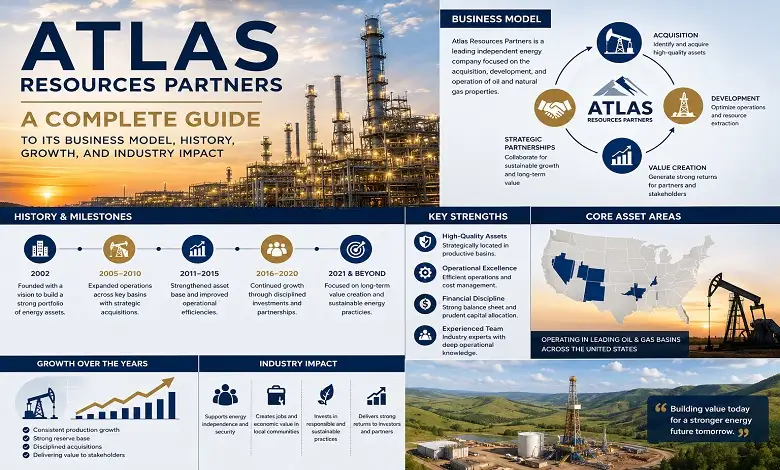
Atlas Resources Partners was one of the prominent independent oil and natural gas companies in the United States, recognized for its unique business model and focus on developing energy assets across major producing regions. Operating as a master limited partnership (MLP), the company combined exploration and production with strategic acquisitions to expand its portfolio and generate long-term value for investors.
During the rapid growth of the U.S. shale industry, Atlas Resources Partners built a strong presence by investing in oil and gas properties, increasing production, and managing a diverse portfolio of energy assets. Like many companies in the sector, however, it also faced significant challenges as falling commodity prices and rising debt reshaped the energy market.
Although the company is no longer an independent publicly traded partnership, its journey offers valuable insights into the opportunities and risks of the energy business. This guide explores the history, business model, operations, growth strategy, and industry impact of Atlas Resources Partners, helping readers understand why the company remains an important case study in the U.S. energy sector.
What Was Atlas Resources Partners?
Atlas Resources Partners (ARP) was an American oil and natural gas exploration and production company organized as a publicly traded Master Limited Partnership (MLP). Its primary objective was to acquire, develop, operate, and manage energy-producing properties while generating steady cash flow from the sale of oil, natural gas, and natural gas liquids.
Unlike many traditional exploration companies that focused solely on drilling, Atlas Resources Partners pursued a diversified approach. In addition to producing energy, it expanded through acquisitions and developed a broad portfolio of producing assets across several resource-rich regions in the United States.
This strategy allowed the company to grow rapidly during periods of strong energy demand while offering investors regular cash distributions, a key characteristic of many MLPs.
At its peak, Atlas Resources Partners managed thousands of producing wells and became a recognized participant in the U.S. upstream energy industry.
Company Background
The origins of Atlas Resources Partners can be traced to the broader Atlas Energy organization, a company with decades of experience in oil and natural gas exploration. As unconventional drilling technologies transformed the American energy landscape, the partnership positioned itself to capitalize on new opportunities in shale development.
Rather than concentrating on a single production area, the company built a geographically diversified portfolio that reduced dependence on one basin or resource type. Its operations included both mature producing properties that generated stable cash flow and development projects with long-term growth potential.
Over time, Atlas Resources Partners expanded its asset base through acquisitions, drilling programs, and infrastructure investments. This balanced approach enabled the partnership to increase production while strengthening its position in a highly competitive industry.
Understanding the Business Model of Atlas Resources Partners
The success of Atlas Resources Partners was largely driven by a business model that combined operational growth with strategic investment. Instead of relying on a single source of income, the partnership generated revenue from multiple activities within the upstream energy sector.
Its business model focused on four core areas.
Exploration and Production
Exploration and production formed the foundation of the company’s operations. Atlas Resources Partners invested in identifying productive oil and natural gas reserves, drilling wells, and operating producing assets across several U.S. regions.
Revenue was primarily generated through the sale of:
- Crude oil
- Natural gas
- Natural gas liquids (NGLs)
Production volumes and profitability were influenced by commodity prices, operational efficiency, and reserve quality.
Strategic Property Acquisitions
Acquiring existing producing properties was another important growth strategy.
Instead of depending entirely on new exploration projects, the company regularly purchased assets that were already generating production. This approach helped increase reserves, improve cash flow, and expand operations more quickly than organic development alone.
Strategic acquisitions also reduced some of the exploration risks typically associated with discovering new reserves.
Asset Development
Beyond acquiring and producing properties, Atlas Resources Partners invested in developing undeveloped acreage through drilling and infrastructure improvements.
Development activities included:
- Drilling new wells
- Expanding production facilities
- Improving recovery rates
- Optimizing field operations
These investments supported long-term production growth while increasing the value of existing assets.
Portfolio Management
Another defining characteristic of Atlas Resources Partners was its focus on managing a diversified portfolio of energy assets.
Rather than concentrating all investments in one geographic area or resource type, the company spread operations across multiple producing regions. This diversification helped reduce operational risk and provided greater flexibility when market conditions changed.
How Atlas Resources Partners Generated Revenue
Like most upstream energy companies, Atlas Resources Partners earned the majority of its income from producing and selling hydrocarbons. However, its diversified operating strategy created multiple revenue streams that supported business growth.
Its primary sources of revenue included:
- Oil production
- Natural gas production
- Natural gas liquids (NGLs)
- Producing property acquisitions
- Development of new wells
- Asset optimization initiatives
This combination of production income and strategic asset management helped the company expand during periods of favourable market conditions while strengthening its reserve base for future growth.
Why Atlas Resources Partners Stood Out
The U.S. energy industry includes hundreds of exploration and production companies, yet Atlas Resources Partners distinguished itself through a combination of strategic growth initiatives and operational flexibility.
Several factors contributed to its reputation:
- A diversified portfolio of oil and natural gas assets
- Strong focus on acquiring producing properties
- Exposure to multiple energy-producing regions
- Long-term reserve development strategy
- Business structure designed to generate investor distributions
- Continuous investment in production growth
These strengths helped the partnership build a competitive position during one of the most active periods in the evolution of the American shale industry.
Growth Strategy of Atlas Resources Partners
The long-term success of Atlas Resources Partners was driven by a growth strategy that balanced acquisitions, operational development, and reserve expansion. Rather than relying on a single approach, the partnership invested in opportunities that could increase production while generating sustainable cash flow.
Its strategy evolved alongside the rapid growth of the U.S. shale industry, allowing the company to strengthen its position in several productive regions.
Expanding Through Acquisitions
One of the company’s primary growth strategies was acquiring producing oil and natural gas properties. Purchasing established assets enabled Atlas Resources Partners to increase production more quickly than starting entirely new exploration projects.
This approach offered several advantages:
- Immediate production and revenue
- Proven reserves with lower exploration risk
- Opportunities to improve operational efficiency
- Faster portfolio expansion
Strategic acquisitions also helped diversify the company’s asset base across different producing regions.
Investing in Resource Development
Acquisitions alone were not enough to support long-term growth. The partnership also invested in developing existing properties to maximize production and extend the life of its reserves.
Key development activities included:
- Drilling new wells
- Upgrading production facilities
- Improving recovery techniques
- Expanding infrastructure
- Optimizing field operations
These investments aimed to increase production while improving the overall value of the company’s assets.
Building a Diversified Portfolio
Diversification played an important role in reducing operational risk.
Instead of concentrating all production in a single basin, Atlas Resources Partners developed a portfolio that included multiple oil and natural gas assets across different geographic regions.
A diversified asset base helped the company:
- Reduce dependence on one producing area
- Manage geological risks
- Improve production stability
- Create additional growth opportunities
This strategy also provided greater flexibility when market conditions varied between regions.
Key Operating Regions
The operations of Atlas Resources Partners were spread across several resource-rich areas in the United States. These regions contained significant reserves of natural gas, crude oil, and natural gas liquids.
By maintaining assets in multiple locations, the company reduced its reliance on any single field while improving long-term production potential.
Its portfolio primarily focused on unconventional shale plays and mature producing properties, both of which contributed to revenue generation and reserve growth.
Competitive Advantages
Several factors helped Atlas Resources Partners compete in the highly competitive upstream energy industry.
Diversified Business Strategy
Unlike companies that depended solely on exploration, the partnership combined acquisitions, production, and asset development to create multiple opportunities for growth.
Experienced Management
Managing oil and natural gas assets requires technical expertise, financial discipline, and operational efficiency. The company’s management team focused on expanding reserves while improving production performance across its portfolio.
Long-Term Asset Development
Rather than seeking only short-term production gains, the company invested in developing existing properties to improve long-term returns.
This strategy supported reserve growth and increased the value of producing assets over time.
Strong Market Presence
During its years of operation, Atlas Resources Partners established relationships with investors, industry partners, and service providers that supported its expansion strategy.
These relationships helped the company identify acquisition opportunities and execute development projects more efficiently.
Challenges Faced by Atlas Resources Partners
Like every company operating in the energy sector, Atlas Resources Partners faced a range of financial and operational challenges.
While the partnership experienced significant growth during favorable market conditions, external factors eventually placed considerable pressure on its business.
Commodity Price Volatility
Oil and natural gas prices are among the most unpredictable factors affecting energy companies.
When prices are high, producers often benefit from increased revenue and stronger cash flow. However, prolonged price declines can significantly reduce profitability.
Because a large portion of its income depended on commodity prices, Atlas Resources Partners was directly affected by fluctuations in the energy market.
High Capital Requirements
Exploring, acquiring, and developing energy assets requires substantial investment.
Major expenses included:
- Property acquisitions
- Drilling operations
- Infrastructure development
- Equipment maintenance
- Environmental compliance
These ongoing investments made access to capital an important part of the company’s growth strategy.
Debt and Financial Pressure
Expansion often requires borrowing, and many energy companies use debt to finance acquisitions and development projects.
As market conditions weakened, declining revenue made it increasingly difficult to manage financial obligations. Reduced cash flow limited the company’s ability to continue investing at previous levels while maintaining investor distributions.
Industry Competition
The U.S. energy market is highly competitive.
Atlas Resources Partners competed with:
- Independent exploration companies
- Large integrated energy corporations
- Regional producers
- Private operators
Competition influenced acquisition opportunities, operating costs, and access to investment capital.
Financial Risks in the Energy Industry
The experience of Atlas Resources Partners highlights several risks that affect nearly every exploration and production company.
Some of the most significant include:
| Risk | Potential Impact |
| Falling oil prices | Lower revenue and profitability |
| Declining natural gas prices | Reduced operating cash flow |
| High debt levels | Increased financial pressure |
| Regulatory changes | Higher compliance costs |
| Operational disruptions | Lower production volumes |
| Market uncertainty | Reduced investment opportunities |
Managing these risks requires careful financial planning, operational efficiency, and long-term strategic decision-making.
What Made Atlas Resources Partners Important?
Although the company ultimately faced financial restructuring, Atlas Resources Partners played an important role during a transformative period for the U.S. energy industry.
Its growth reflected broader industry trends, including:
- Increased investment in shale development
- Expansion through strategic acquisitions
- Greater use of advanced drilling technologies
- Rising domestic energy production
- Growing interest in master limited partnerships (MLPs)
For investors and business professionals, the company’s history provides valuable insight into how energy companies grow, adapt, and respond to changing market conditions.
Bankruptcy and Financial Restructuring
After years of expansion, Atlas Resources Partners encountered one of the most difficult periods in the U.S. energy industry. A sharp decline in oil and natural gas prices significantly reduced revenue across the sector, placing financial pressure on companies with high operating costs and substantial debt.
Like many exploration and production businesses, the partnership faced lower cash flow while continuing to manage ongoing expenses such as drilling operations, infrastructure maintenance, and debt obligations. As market conditions remained challenging, restructuring became the most practical path toward addressing its financial commitments.
In 2016, Atlas Resources Partners filed for Chapter 11 bankruptcy protection in the United States. The restructuring process focused on reducing debt, preserving valuable assets, and reorganizing the business under a more sustainable financial structure.
Although the partnership ceased operating as an independent publicly traded entity, its restructuring reflected a broader trend across the energy industry during a prolonged commodity price downturn.
Factors Behind the Bankruptcy
No single event led to the financial restructuring of Atlas Resources Partners. Instead, several interconnected factors contributed to the company’s challenges.
Declining Commodity Prices
The value of crude oil and natural gas dropped sharply, reducing revenue across the energy sector. Lower prices affected production income and weakened overall financial performance.
Increased Debt
Years of acquisitions and infrastructure investments required significant capital. While these investments supported growth during favorable market conditions, they also increased financial obligations when revenue declined.
Reduced Cash Flow
Lower production income limited the company’s ability to fund operations, invest in new development projects, and maintain financial flexibility.
Industry-Wide Downturn
The challenges faced by Atlas Resources Partners were not unique. During the same period, numerous independent energy companies experienced financial distress as global energy markets underwent significant changes.
Industry Impact and Legacy
Although Atlas Resources Partners no longer operates independently, its history remains an important part of the U.S. energy industry’s evolution.
The company demonstrated how strategic acquisitions, reserve development, and portfolio diversification could support rapid growth during favorable market conditions. At the same time, its experience highlighted the importance of maintaining financial resilience in a cyclical industry.
Today, many energy companies place greater emphasis on:
- Capital discipline
- Sustainable growth
- Strong balance sheets
- Operational efficiency
- Long-term cash flow management
These priorities have become increasingly important as businesses seek to remain competitive despite market volatility.
Key Lessons from Atlas Resources Partners
The story of Atlas Resources Partners offers valuable insights for business leaders, investors, and companies operating in capital-intensive industries.
Sustainable Growth Matters
Expanding too quickly can increase financial risk if market conditions change unexpectedly. Growth strategies should always align with long-term financial stability.
Diversification Reduces Risk
A diversified portfolio can help reduce exposure to individual assets or regions. While diversification cannot eliminate market risk, it can improve overall business resilience.
Market Conditions Can Change Quickly
Commodity-based industries are highly cyclical. Businesses should prepare for periods of declining demand and price volatility through careful planning and conservative financial management.
Strong Cash Flow Is Essential
Healthy cash flow supports daily operations, future investments, and financial flexibility during uncertain economic conditions.
Strategic Decision-Making Creates Long-Term Value
Successful companies continually evaluate market conditions, operational performance, and investment priorities to adapt to changing business environments.
Atlas Resources Partners at a Glance
| Feature | Details |
| Industry | Oil and Natural Gas Exploration & Production |
| Business Structure | Master Limited Partnership (MLP) |
| Core Operations | Exploration, production, acquisitions, asset development |
| Primary Products | Crude oil, natural gas, natural gas liquids |
| Growth Strategy | Property acquisitions and reserve development |
| Major Challenge | Commodity price decline and financial leverage |
| Bankruptcy Filing | Chapter 11 (2016) |
| Legacy | Demonstrated both the opportunities and risks of rapid expansion in the energy sector |
Frequently Asked Questions
Q: What was Atlas Resources Partners?
A. Atlas Resources Partners was a U.S.-based master limited partnership (MLP) focused on oil and natural gas exploration, production, property acquisitions, and asset development.
Q: Why was Atlas Resources Partners well known?
A. The company gained recognition for its diversified growth strategy, expanding through acquisitions while developing energy-producing assets across several major U.S. resource regions.
Q: Why did Atlas Resources Partners file for bankruptcy?
A. The partnership filed for Chapter 11 bankruptcy in 2016 after prolonged declines in oil and natural gas prices, combined with financial pressure from debt and reduced operating cash flow.
Q: Is Atlas Resources Partners still operating today?
A. No. Following its restructuring, Atlas Resources Partners no longer operates as an independent publicly traded partnership.
Q: What industries can learn from Atlas Resources Partners?
A. The company’s experience offers valuable lessons for businesses in capital-intensive industries, particularly regarding financial discipline, risk management, sustainable growth, and adapting to changing market conditions.
Q: What made the business model of Atlas Resources Partners unique?
A. Unlike many traditional exploration companies, Atlas Resources Partners combined property acquisitions, resource development, and portfolio management to support long-term growth and generate revenue from multiple operational activities.
Conclusion
Atlas Resources Partners played a meaningful role during a transformative period in the U.S. oil and natural gas industry. Through strategic acquisitions, reserve development, and a diversified portfolio, the partnership expanded rapidly and became a recognized participant in the nation’s upstream energy market.
Its eventual financial restructuring also serves as a reminder that success in the energy sector depends on more than production growth. Market volatility, capital allocation, debt management, and operational efficiency all influence long-term business performance.
Although Atlas Resources Partners is no longer an independent company, its history continues to provide valuable insights for investors, business leaders, and industry professionals. By understanding both its achievements and its challenges, organizations can better appreciate the importance of sustainable growth, financial resilience, and strategic decision-making in an industry where market conditions can change rapidly.