
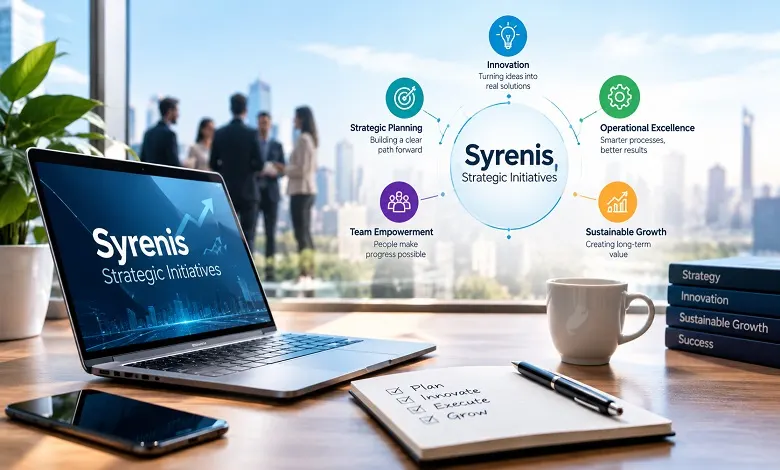
Syrenis strategic initiatives focus on advancing enterprise privacy management, improving consent and preference technology, strengthening data governance, and expanding the company’s international presence. As organizations manage increasing volumes of customer information and navigate complex privacy requirements, businesses need reliable ways to record consent, respect individual preferences, and maintain consistent data practices across their technology systems.
Syrenis specializes in enterprise consent and preference management, helping organizations manage customer choices across digital channels, business applications, and multiple markets. Its strategic direction reflects the growing importance of privacy technology in modern business operations, where regulatory compliance, customer trust, and effective data management are closely connected.
The company’s April 2026 brand refresh, which brought its platform under the unified Syrenis name, also represents an important development in its corporate positioning. Understanding these initiatives provides insight into how Syrenis aims to support enterprises facing increasingly demanding privacy and digital transformation challenges.
What Are Syrenis Strategic Initiatives?
Syrenis strategic initiatives are the company’s broader priorities for technology development, enterprise customer support, privacy governance, and international expansion. These priorities focus on helping organizations move away from fragmented consent processes toward a more centralized and manageable privacy infrastructure.
Modern businesses often use numerous systems to collect customer information, manage marketing campaigns, process transactions, and deliver digital services. When consent records are spread across disconnected platforms, maintaining accurate information becomes more difficult.
Syrenis addresses this challenge through technology designed to centralize consent and preference records and connect them with other business systems. Its approach supports organizations that need greater visibility into customer choices and more consistent processes for handling personal information.
The company’s strategic priorities can be understood through several connected areas:
- Enterprise consent and preference management
- Integration with existing business technology
- Privacy governance and regulatory support
- Customer experience and responsible data use
- International expansion and enterprise growth
- Adaptation to changing digital and data management requirements
These areas are interconnected because effective privacy management depends on more than collecting a customer’s consent. Organizations must also maintain reliable records, communicate preferences across systems, and establish appropriate internal controls.
1. Advancing Enterprise Consent Management
Enterprise consent management is a central part of Syrenis’s technology focus. Large organizations may operate several websites, applications, brands, and customer databases, each potentially collecting consent information through different processes.
Without a coordinated system, a customer’s preferences may not be reflected consistently across every relevant platform. This can create administrative difficulties and increase the risk of unwanted communications or inconsistent data handling.
Syrenis provides consent management capabilities intended to help businesses maintain centralized records and manage customer choices across connected systems.
Why Centralized Consent Matters
Centralized consent management can give organizations a clearer overview of when consent was collected, what the customer agreed to, and how that information should be used. Depending on implementation, it can also support audit trails and internal reporting.
For example, an international retailer may collect customer consent through its website, mobile application, and in-store loyalty program. A coordinated approach can help the organization manage these records more consistently rather than relying on separate processes for each channel.
However, centralization alone does not guarantee compliance. Businesses must configure their systems correctly and ensure that consent records are used in accordance with applicable laws and internal policies.
2. Expanding Customer Preference Management
Consent and customer preferences are related, but they serve different purposes. Consent concerns permission for specific forms of data processing where consent is the appropriate legal basis. Preferences may include communication channels, content interests, and other choices about how a customer interacts with a business.
Syrenis’s preference management capabilities help organizations collect and manage customer choices in a coordinated environment.
Creating More Relevant Customer Experiences
A customer might prefer receiving product updates by email rather than text message. Another customer may wish to receive information about a particular product category but not general promotional messages.
A preference management system can help businesses record these choices and make them available to relevant platforms. This may reduce inconsistent communications and help marketing teams deliver more appropriate messages.
For organizations operating multiple brands, preference management can also help establish a clearer approach to customer choice across different parts of the business.
The value of this initiative depends on how effectively preferences are collected, updated, synchronized, and respected throughout the customer journey.
3. Strengthening Privacy Technology and System Integration
Enterprise privacy management rarely operates in isolation. Businesses rely on customer relationship management platforms, marketing automation systems, analytics tools, customer data platforms, and other applications.
When these systems do not communicate effectively, consent information can become outdated or inconsistent.
Syrenis emphasizes integration as part of its platform strategy. Its official platform information highlights an ecosystem of more than 350 integrations, reflecting the importance of connecting privacy management with existing enterprise technology.
Reducing Fragmented Workflows
Consider a business that uses one platform for email marketing, another for customer records, and a third for customer support. If a customer changes a relevant preference, the update may need to be reflected across several systems.
Integrations can help automate the transfer of information and reduce repetitive administrative work. They can also make it easier for teams to work with consistent records.
Businesses should still evaluate integration compatibility, synchronization frequency, data quality, access permissions, and error-handling procedures before implementation. The presence of an integration does not automatically mean every workflow will function correctly without configuration.
4. Supporting Global Privacy Compliance
Global privacy compliance is a significant challenge for organizations that collect or process personal information across multiple countries. Requirements may vary depending on location, industry, the type of information involved, and the purpose of processing.
Syrenis provides privacy management capabilities designed to help enterprises organize consent records, manage preferences, and support privacy governance across different jurisdictions.
Responding to Different Regulatory Requirements
The European Union’s General Data Protection Regulation (GDPR) and California’s Consumer Privacy Act, as amended by the California Privacy Rights Act, are examples of privacy frameworks that influence how organizations manage personal information.
Businesses may need to maintain records of consent where applicable, provide mechanisms for exercising privacy rights, and ensure that their systems reflect relevant customer choices.
Technology can support these processes by improving documentation and making information easier to access. However, organizations must determine which legal requirements apply to their operations and configure their processes accordingly.
Syrenis should therefore be viewed as a technology provider that can support privacy operations, not as a substitute for legal advice, organizational accountability, or comprehensive compliance planning.
5. Expanding Syrenis’s International Presence
International expansion is another part of Syrenis’s business direction. The company has established a presence in North America, including a US commercial operation in Atlanta, to support its engagement with enterprise customers in the region.
Expanding into new markets can help a technology business reach additional customers and develop a stronger understanding of regional business needs.
Opportunities in the North American Market
North American enterprises operate across a range of industries, including retail, financial services, healthcare, technology, and telecommunications. Many manage large customer databases and complex digital marketing environments.
These organizations may need centralized tools for consent management, preference synchronization, and privacy governance across multiple brands and systems.
A stronger regional presence can help Syrenis build customer relationships and support enterprise implementation requirements. However, market growth depends on factors such as product suitability, customer demand, competition, service quality, and the ability to demonstrate measurable value.
International expansion is therefore an ongoing business priority rather than a guaranteed outcome.
6. Building Customer Trust Through Privacy Management
Customer trust has become an important consideration in digital business strategy. People increasingly expect organizations to explain how their information is used and respect their communication choices.
Poorly managed preferences, confusing consent notices, and repeated unwanted messages can weaken the relationship between a business and its customers.
Syrenis’s focus on consent and preference management is relevant to these concerns because it helps organizations manage customer choices more consistently.
Making Privacy Choices Easier to Manage
A well-designed privacy process should make it reasonably clear what a customer is agreeing to and how preferences can be changed. Organizations also need processes for ensuring that relevant updates reach the systems responsible for customer communication and data processing.
When implemented effectively, these practices can support transparency and help reduce avoidable communication errors.
Privacy technology alone cannot create customer trust. Clear policies, responsible data use, good security practices, and responsive customer service remain essential.
7. Supporting Digital Transformation Across Enterprises
Digital transformation often involves connecting business systems, automating repetitive processes, and improving how information moves between departments.
Privacy management is part of this transformation because consent and preference information may affect marketing, sales, customer service, analytics, and other business activities.
Syrenis’s integration-focused approach can help organizations incorporate privacy controls into their wider technology environments rather than treating privacy as a separate administrative task.
Improving Operational Efficiency
Centralized records and connected workflows can reduce the need for teams to reconcile conflicting information manually. They may also help organizations establish more consistent processes for reviewing and updating customer choices.
Before adopting a new platform, businesses should identify existing process gaps, define their privacy requirements, and determine how the proposed system will interact with current applications.
A successful implementation requires clear ownership, appropriate configuration, staff training, and ongoing monitoring.
8. Exploring AI and Emerging Data Governance Needs
Artificial intelligence is changing how organizations analyze information, personalize services, automate tasks, and make business decisions. These developments also raise questions about data access, permitted uses, transparency, and accountability.
Syrenis’s focus on consent and privacy management is relevant to this changing environment because organizations need reliable information about customer choices and data-handling requirements.
The Relationship Between AI and Privacy
Businesses using AI may need to consider whether their data collection and processing practices are appropriate for the intended purpose. They must also address security, data quality, access controls, and other relevant legal and ethical requirements.
Consent management can contribute to a broader governance framework by helping organizations maintain records and apply relevant privacy choices. It does not, by itself, resolve every challenge associated with AI systems.
Responsible AI adoption requires a wider approach that includes risk assessment, human oversight, security measures, and clear accountability.
9. Syrenis’s 2026 Brand Refresh and Strategic Positioning
In April 2026, Syrenis announced a brand refresh that unified its platform under the Syrenis name. The change marked an evolution in how the company presented its enterprise privacy technology and capabilities.
A unified brand can make it easier for customers to understand a company’s overall offering, particularly when products or services have previously been presented under separate names.
Why Brand Consistency Matters
For enterprise technology providers, clear positioning helps prospective customers understand the problems a platform addresses and how its capabilities fit into their existing operations.
Syrenis’s brand refresh communicates its focus on enterprise privacy management and the challenges organizations face when managing consent and preferences at scale.
The refresh is a documented corporate development. Its long-term commercial impact, however, will depend on factors such as product performance, customer adoption, service delivery, and market demand.
10. What Syrenis Strategic Initiatives Mean for Businesses
Syrenis’s strategic direction addresses several practical challenges faced by organizations that manage personal information across multiple channels and systems.
More consistent records: Centralized consent and preference management can improve visibility into customer choices.
Improved workflow coordination: Integrations may help connected systems receive and apply relevant updates.
Better documentation: Organized records can support internal reviews, reporting, and audit preparation.
More relevant communication: Properly managed preferences can help businesses align marketing messages with customer choices.
Scalable privacy operations: Centralized processes may make it easier to coordinate privacy management across brands, teams, and regions.
These benefits are not automatic. Businesses should assess their current processes, integration requirements, data governance responsibilities, and implementation costs before choosing a privacy management solution.
11. Challenges in Implementing Enterprise Consent Management
Although privacy technology can improve operational processes, organizations may encounter challenges during implementation.
Legacy Systems and Data Quality
Older systems may store customer information in inconsistent formats or lack suitable integration options. Businesses may need to clean existing data and standardize records before introducing a centralized platform.
Internal Responsibilities
Consent management often involves several departments, including marketing, IT, legal, security, and customer service. Clear responsibilities are needed to ensure that records remain accurate and that problems are resolved promptly.
Employee Training
Employees must understand how consent and preference records should be used. Without suitable training, even well-configured technology may be applied incorrectly.
Ongoing Governance
Privacy requirements and business processes can change over time. Organizations should periodically review their configurations, integrations, access permissions, and recordkeeping procedures.
These considerations are important when evaluating Syrenis or any other enterprise privacy management platform.
Conclusion
Syrenis strategic initiatives center on enterprise consent management, customer preference technology, system integration, privacy governance, and international growth. Its 2026 brand refresh and North American presence demonstrate its focus on serving organizations with increasingly complex data management requirements.
As businesses adopt new technologies and operate across multiple markets, privacy management is becoming an important part of digital transformation. Syrenis’s approach highlights how centralized consent and preference systems can support consistent data practices, improve operational coordination, and help organizations respect customer choices.
For businesses considering enterprise privacy technology, the most important factors remain practical: identify existing gaps, understand applicable legal requirements, evaluate system compatibility, and establish clear governance. With appropriate planning and implementation, privacy management can become a more integrated part of responsible business operations.
Frequently Asked Questions About Syrenis Strategic Initiatives
Q: What are Syrenis strategic initiatives?
A: Syrenis strategic initiatives focus on enterprise consent management, customer preference technology, privacy governance, system integration, and international expansion. These priorities aim to help organizations manage customer choices and privacy processes more consistently.
Q: What does Syrenis specialize in?
A: Syrenis specializes in enterprise consent and preference management technology. Its platform helps organizations manage customer consent records and preferences across connected systems and digital channels.
Q: Why are Syrenis strategic initiatives important?
A: They address the growing need for businesses to manage personal information responsibly, maintain consistent customer preferences, and coordinate privacy processes across complex technology environments.
Q: How does Syrenis support consent management?
A: Syrenis provides technology designed to help organizations centralize consent records and connect them with relevant business systems. The exact results depend on system configuration, integrations, and internal processes.
Q: How does Syrenis help with customer preference management?
A: Its preference management capabilities help organizations collect and manage customer choices, such as communication preferences. These records can support more consistent customer interactions when properly synchronized across connected systems.
Q: Does Syrenis guarantee GDPR compliance?
A: No technology platform can guarantee compliance on its own. Syrenis can support consent and privacy management processes, but organizations remain responsible for determining their legal obligations and maintaining appropriate policies, security controls, and governance.
Q: What is the significance of Syrenis’s 2026 brand refresh?
A. The April 2026 brand refresh unified the company’s platform under the Syrenis name. It reflected the company’s positioning around enterprise privacy management and its broader technology offering.
Q: Is Syrenis expanding internationally?
A: Syrenis has established a North American presence, including a US commercial operation in Atlanta. This supports its efforts to engage enterprise customers beyond its established UK presence.
Q: Can Syrenis integrate with existing business systems?
A: Syrenis highlights a broad integration ecosystem designed to connect its privacy management capabilities with other business applications. Organizations should verify specific integrations, technical requirements, and compatibility before implementation.
Q: How does AI affect enterprise privacy management?
A: AI introduces additional considerations around data use, access, security, and accountability. Consent management can contribute to privacy governance, but organizations also need broader AI risk management and oversight processes.
Q: What should businesses evaluate before adopting a consent management platform?
A: Businesses should assess their existing systems, regulatory obligations, integration needs, reporting requirements, implementation costs, security controls, and internal responsibilities. They should also establish how success will be measured after deployment.
Q: How can effective preference management improve customer experience?
A: It can help organizations respect customer communication choices and reduce inconsistent messaging. The benefits depend on collecting accurate preferences, updating connected systems, and maintaining clear customer-facing processes.