
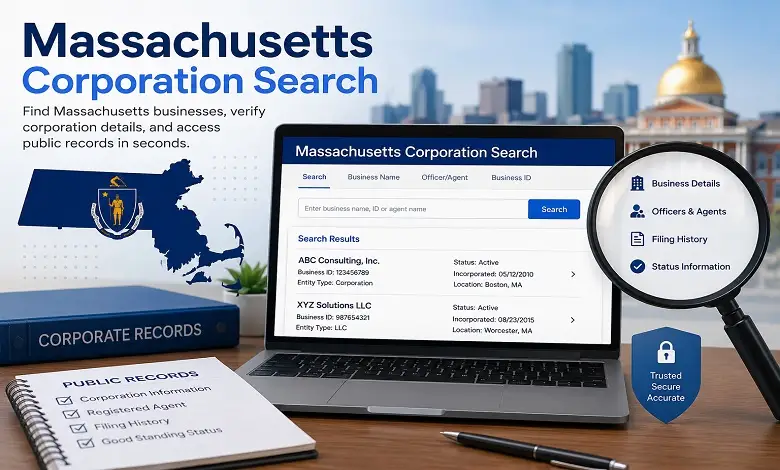
Before signing a contract, registering a new company, or working with an unfamiliar organization, it’s important to verify that the business is legally registered and in good standing. An official Massachusetts corporation search helps you confirm whether a company exists, review its public filings, and understand its legal status.
The Commonwealth of Massachusetts maintains public business records through the Corporations Division, allowing anyone to look up registered entities online. These records are useful for entrepreneurs checking name availability, investors performing due diligence, attorneys researching corporate filings, and consumers who want to confirm that a business is properly registered.
This guide explains how Massachusetts business records are organized, what information is publicly available, and how to interpret the details you find.
What Is a Massachusetts Corporation Search?
A Massachusetts corporation search is the process of locating official information about a business entity registered in Massachusetts. The records are maintained by the Corporations Division within the Office of the Secretary of the Commonwealth and include information submitted during the life of a business.
The database isn’t limited to traditional corporations. It also contains records for many other business structures, including:
- Limited Liability Companies (LLCs)
- Professional corporations
- Nonprofit corporations
- Limited partnerships
- Foreign entities authorized to operate in Massachusetts
- Limited liability partnerships
Each entity has its own public record that documents important registration and filing information.
Why Business Verification Matters
Business records serve an important purpose beyond confirming that a company exists. They help individuals and organizations make informed decisions before entering legal or financial relationships.
For example, you may want to verify a business before:
- Signing a service agreement
- Hiring a contractor
- Purchasing an existing company
- Investing in a startup
- Opening a commercial account
- Extending business credit
- Registering a similar company name
Checking official records can reduce the risk of working with inactive businesses, dissolved, or no longer authorized to operate.
Understanding the Commonwealth of Massachusetts Corporation Search
You’ll often see the phrase Commonwealth of Massachusetts corporation search used online. It refers to the official business entity records maintained by the Commonwealth, rather than a separate database.
Massachusetts is one of the few U.S. states that officially refers to itself as a Commonwealth. While the terminology differs, the purpose remains the same: providing public access to business registration records.
These records help users confirm information directly from government filings instead of relying on third-party business directories, which may contain outdated or incomplete data.
Where Massachusetts Business Records Come From
Every corporation, LLC, nonprofit, and many other business entities must file formation documents before they can legally operate in Massachusetts.
Those filings are maintained by the Corporations Division and become part of the public record.
Depending on the type of entity, public records may include:
- Articles of organization or incorporation
- Annual reports
- Amendments
- Name changes
- Mergers
- Dissolutions
- Foreign registration filings
- Reinstatement documents
Because these records are filed directly with the Commonwealth, they are generally considered the most reliable source of official business information.
How to Locate a Registered Business
Finding information about a Massachusetts business is usually straightforward if you have basic details about the company.
Most users begin with one of the following:
Business Name
Entering the legal business name is the most common method. If you’re unsure of the exact spelling, using only a distinctive portion of the name often produces better results.
Entity Identification Number
If you already know the entity ID assigned by the Commonwealth, this method typically provides the fastest and most accurate result.
Filing Information
Some users search using filing-related details when researching historical records or confirming previously submitted documents.
Choosing the appropriate search method depends on the information you already have.
What Information Can You Find?
Once you locate a business, the public record provides several useful details that help identify and verify the entity.
Legal Business Name
This is the official name registered with the Commonwealth and should match the name used in legal documents and state filings.
Entity Type
The record identifies the organization’s legal structure, such as:
- Corporation
- Limited Liability Company
- Nonprofit Corporation
- Limited Partnership
- Foreign Corporation
Understanding the entity type is important because different business structures have different legal and tax responsibilities.
Current Status
One of the most valuable sections of the record is the entity’s current status.
It indicates whether the business remains legally registered or whether changes have affected its authority to operate.
We’ll explain these statuses in detail later in this guide.
Date of Formation
The formation date shows when the business was originally organized or authorized to conduct business in Massachusetts.
For long-established companies, this date can provide insight into the organization’s operating history.
Principal Office Address
Many records include the principal office address provided in official filings.
Because businesses may relocate over time, it’s helpful to compare this information with recent filings or the company’s official website.
Filing History
The filing history often provides a timeline of significant events in the company’s lifecycle.
Examples include:
- Annual reports
- Amendments
- Registered office changes
- Name changes
- Mergers
- Administrative filings
Reviewing this history can reveal whether a business has remained compliant with state filing requirements.
Understanding Business Status
Many users focus only on whether a company appears in the database, but the entity’s status is equally important.
A business may be registered yet no longer authorized to operate.
Some of the most common statuses include:
Active
An active status generally indicates that the business is currently registered and has satisfied the state’s required filings.
Dissolved
A dissolved entity has legally ended its corporate existence, either voluntarily or through administrative action.
Revoked
A revoked status may indicate that the entity lost its authority because certain legal or filing requirements were not met.
Withdrawn
Foreign entities sometimes withdraw their registration after ceasing business operations within Massachusetts.
Understanding these distinctions helps avoid confusion when reviewing corporate records.
Common Mistakes When Looking Up Business Records
Even experienced users occasionally have difficulty finding the correct entity.
Some common issues include:
- Searching for a trade name instead of the legal entity name
- Misspelling the company name
- Including unnecessary punctuation
- Looking for a recently formed business before records have been processed
- Confusing a corporation with an LLC or another business structure
Taking a flexible approach—such as searching with only part of the company name—often leads to better results.
Using Business Records Before Starting a New Company
One of the most common reasons people use a Massachusetts corporation search is to check whether a proposed business name is already in use. Massachusetts law generally requires every new business entity to have a name that is distinguishable from existing registered entities.
Reviewing the state’s records before filing formation documents can help you:
- Reduce the risk of application delays
- Avoid conflicts with existing businesses
- Choose a stronger, more distinctive brand name
- Save time and filing costs
Keep in mind that finding an available name in the business registry does not automatically guarantee trademark rights. If your business will operate beyond Massachusetts or build a recognizable brand, it’s also wise to research federal trademark registrations.
How to Interpret Business Statuses
When reviewing a company’s record, the status tells you whether the entity is currently authorized to operate or if its legal standing has changed over time.
Active
An active status generally means the entity has met the Commonwealth’s filing requirements and remains in good standing. For most users, this indicates the business is legally recognized and authorized to conduct business.
Dissolved
A dissolved entity has formally ended its legal existence. Dissolution may occur voluntarily when owners decide to close the business or administratively if required filings are not maintained.
Revoked
A revoked status usually indicates that the entity has lost certain legal rights or authority because of noncompliance with state requirements. Businesses in this status may need to complete reinstatement procedures before resuming normal operations.
Withdrawn
Foreign corporations and LLCs that were previously authorized to operate in Massachusetts may withdraw their registration after ending business activities within the Commonwealth.
Inactive
Some records may indicate that an entity is inactive, meaning it is no longer operating under its previous registration status.
Understanding these terms is important during due diligence because a registered business name alone doesn’t necessarily indicate that a company is actively conducting business.
What Is the Massachusetts Corporate Database?
The Massachusetts corporate database search gives users access to publicly available records filed with the Corporations Division. Rather than serving as a business directory or review platform, the database functions as an official registry of legal entities.
Depending on the entity and available filings, records may include:
- Legal entity name
- Entity identification number
- Business structure
- Formation or registration date
- Current status
- Principal office information
- Filing history
- Recent amendments
- Annual report filings
These records provide valuable information for legal research, compliance reviews, financial due diligence, and business verification.
Understanding the Massachusetts Secretary of State Corporations Search
Many people search online for a Massachusetts secretary of state corporations search, but the official business registry is maintained by the Secretary of the Commonwealth of Massachusetts through the Corporations Division.
Although the wording differs from many other states that use the title “Secretary of State,” the purpose is the same: maintaining official records for registered business entities.
Using the official state records offers several advantages over third-party websites because the information comes directly from documents filed with the Commonwealth.
Practical Tips for Finding the Right Business
If you don’t immediately locate the company you’re looking for, consider these strategies.
Search Using Part of the Name
If you’re unsure about the complete legal name, searching with one or two distinctive words often produces more accurate results.
Check Alternative Spellings
Some businesses abbreviate words such as “Corporation,” “Company,” or “Limited,” while others spell them out completely.
Review Recent Filings
Businesses frequently update addresses, officers, or organizational details. Reviewing filing history can provide a more complete picture than relying only on the current record.
Verify the Entity Type
Companies with similar names may exist under different business structures, such as corporations, LLCs, or nonprofit organizations.
When Should You Review Business Records?
Official records can be useful in many situations beyond forming a company.
Before Signing Contracts
Verifying a company’s legal status helps confirm you’re dealing with a registered business.
Before Investing
Investors often review registration history and filing records as part of their due diligence process.
Before Extending Credit
Lenders, suppliers, and service providers commonly verify business information before offering financing or payment terms.
During Compliance Reviews
Legal and accounting professionals regularly consult public filings when preparing reports or reviewing corporate compliance.
When Researching Competitors
Business owners may review publicly available information to better understand competitors operating within the same industry.
Common Misconceptions
Several misconceptions often lead to confusion when researching Massachusetts businesses.
“If a Business Appears in the Database, It’s Automatically Active”
Not necessarily. Always review the entity’s current status rather than assuming registration alone confirms active operations.
“Trade Names and Legal Names Are the Same”
A company may conduct business under a trade name while its legal entity name differs from the branding customers recognize.
“Older Businesses Have More Reliable Records”
The age of a business doesn’t necessarily reflect its compliance or financial health. Filing history provides a more meaningful picture.
Final Thoughts
Whether you’re launching a startup, researching a potential business partner, or performing legal due diligence, the Massachusetts corporation search provides access to reliable public information that can support informed decisions.
Understanding how the official registry works, knowing how to interpret business statuses, and reviewing filing histories can help you avoid unnecessary risks and verify that a business is properly registered. While many people search using phrases such as Massachusetts corporations search, Massachusetts secretary of state corporations search, or Massachusetts corporate database search, they all lead to the same goal—accessing official business records maintained by the Commonwealth.
By relying on official filings instead of unofficial directories, you can make better business decisions with greater confidence and ensure you’re working with accurate, up-to-date information.
Frequently Asked Questions
Q: Is the Massachusetts corporation search available to the public?
A: Yes. Basic business entity records maintained by the Commonwealth are publicly accessible through the official online registry.
Q: Can I verify an LLC using the same database?
A: Yes. The registry includes corporations, limited liability companies (LLCs), nonprofit organizations, partnerships, and many other registered business entities.
Q: Does the registry show filing history?
A: Many entities include filing histories that may contain annual reports, amendments, mergers, and other official documents submitted to the Corporations Division.
Q: Is the Commonwealth of Massachusetts corporation search different from the regular business lookup?
A: No. The term Commonwealth of Massachusetts corporation search refers to the same official business records maintained by the Commonwealth. The wording simply reflects Massachusetts’ official designation as a Commonwealth rather than a state.
Q: How accurate is the information?
A: The records are based on filings submitted to the Corporations Division. While they are considered the official source of business registration information, recently submitted filings may require processing before appearing in the public record.